How make your child super intelligent and brilliant in just two months, even if they hate reading . Get the 15-minute-a-day system that helps your child read with understanding, remember what they learn, and stop going blank in exams, without shouting, beating or expensive tutors.
Dear Mother — you have already shouted tonight. You have already seen the tears fall on the notebook. And you are already asking: "If he is struggling like this in Primary 3, what happens in secondary school?"
Here is what changes things: not more lessons, but a different way of learning at home.
Dear Tired Mother,
I know exactly how your heart beats every afternoon.
You close from work, battle through the stressful Nigerian traffic, and arrive home exhausted. Your body is aching, your head is heavy, but you cannot rest.
Why? Because you have to sit at the table to do homework with a child who is falling further and further behind every single week.
And within 15 minutes, the nightmare begins.
Your child is 7, 8, or 9 years old now. They aren't in nursery school anymore. The work is harder. You explain a long-division step or a reading comprehension passage three times. You ask them to repeat it. They look at you with blank, confused eyes. You explain it again, your voice rising in frustration.
Before you know it, you are shouting. Your child starts crying, big tears rolling down their cheeks onto their notebook. They close their book, terrified. You storm out of the room, sit on your bed, and bury your face in your hands — feeling a deep, heavy guilt.
"What am I doing wrong as a mother? If they are already struggling like this in primary school, how will they ever pass Common Entrance? How will they survive secondary school?"
Let me tell you the absolute truth: You are NOT a bad mother. And your child is NOT dull.
The problem is not your child's brain. The problem is that between the ages of 7 and 10, the school system completely changes. They stop teaching your child how to read, and they start expecting them to read to learn complex topics.
If your child doesn't have the right memory structures for this massive jump, their brain experiences overload. No amount of beating, shouting, or expensive private tutors will change their report card until you change how they learn at home.
What Waiting Really Costs
A child who starts Primary 3 behind does not "catch up by himself." Each term the work builds on the last. Fractions need multiplication. Comprehension needs vocabulary. So the gap you see today quietly becomes a bigger gap next term, and the child starts to say "I am just not smart" long before Common Entrance.
Every week you wait is another week of 4-out-of-20 papers, of shouting at the dining table, of a child who is slowly learning to hate school. The fix is not hard. But it is easier at 8 than at 12.
The Heartbreaking Story of Chisom and Her 7-Year-Old Son, Aaron
Her story might sound exactly like the life you are living right now.
Chisom was a hardworking woman, raising her son Aaron single-handedly. She sacrificed everything for him. She woke up at 4:30 AM every morning to prepare his uniform, cook his food, pack his bag, and drop him off at an expensive private school before rushing to her own office.
She was spending almost half of her salary on his school fees because she wanted the absolute best for him.
But by the time Aaron entered Primary 3, school was telling a terrible story.
At home, Aaron was a very bright boy. He was lively, sharp, and highly curious.
He could sit for hours watching Paw Patrol or Ben 10 and remember every single character, complex alien name, and dialogue perfectly without missing a word. His memory at home amazed her!
But the moment Aaron sat down for a school test, his brain went completely blank.
His notebooks always came home filled with painful red ink from his teachers: "Very slow to grasp Primary 3 math concepts." "Poor recall during assessments." "Easily distracted, lagging behind his peers."
Every report card day was a day of terror for Chisom. While other mothers were smiling, laughing, and taking pictures with their children's certificates, Chisom would quietly fold Aaron's report card, hide it in her bag, and walk away with a heavy heart, holding back tears.
The Day That Broke Her Total Spirit
This was the day everything almost collapsed.
One rainy Tuesday afternoon, Aaron came home from school with his head bowed. His shoulders were shaking. He handed his mother a piece of paper. It was his mid-term mathematics test. At the top of the page, written in big, ugly red ink, was the score: 4 out of 20.
Aaron looked up at Chisom with tears streaming down his face and asked a question that cut through her heart like a sharp knife: "Mommy, please don't be angry… is something wrong with my brain? Am I stupid?"
Chisom choked back her own tears, hugged him tightly, and told him no. But inside, she was bleeding.
Her child was not just failing; his self-esteem was being totally destroyed. His classmates were laughing at him because he couldn't keep up with the board. He was starting to believe he was completely worthless.
Desperate for a solution, Chisom squeezed her tight budget to hire a private lesson teacher for ₦25,000 a month. When that teacher didn't work, she changed him and hired another one. Then a third one.
Nothing changed. The bills kept coming, but the grades stayed at the bottom. The worry followed her to her office. She became distracted at work, missed deadlines, and her manager gave her a stern warning that her job was at risk.
Chisom was trapped in a living nightmare.
The 3-Month Miracle
This was the moment everything began to change.
One afternoon, out of absolute frustration, Chisom broke down and opened up to a senior colleague at work named Amanda. Amanda was a former teacher who had trained in child psychology before moving into corporate work.
Amanda smiled gently and said something that changed Chisom's life forever.
"Chisom, Aaron does not need more teaching. He does not need extra lessons. He does not need you to shout at him. Aaron is highly intelligent — his memory of cartoons proves it. The only problem is that between ages 7 and 10, the curriculum gets incredibly abstract. His brain is rejecting the rigid, boring way the school presents it. Change the method at home, and you will unlock his genius."
Those words landed differently from anything Chisom had ever heard before.
Amanda sat Chisom down and shared a few simple, unconventional psychological techniques designed specifically for children in upper primary school. They take just 15 minutes a day at home. No long study marathons. No shouting. No beatings. Just gentle, visual, memory-locking exercises.
Chisom went home and applied the methods faithfully.
The result? It was like a switch was turned on in Aaron's mind.
Peace slowly returned to the home.
See what mothers are saying about this
Mothers just like you — tired, worried, and determined — have used these methods to change their child's story.
Real messages from parents using the system
Screenshots from WhatsApp, shared by parents who followed the steps with their children.
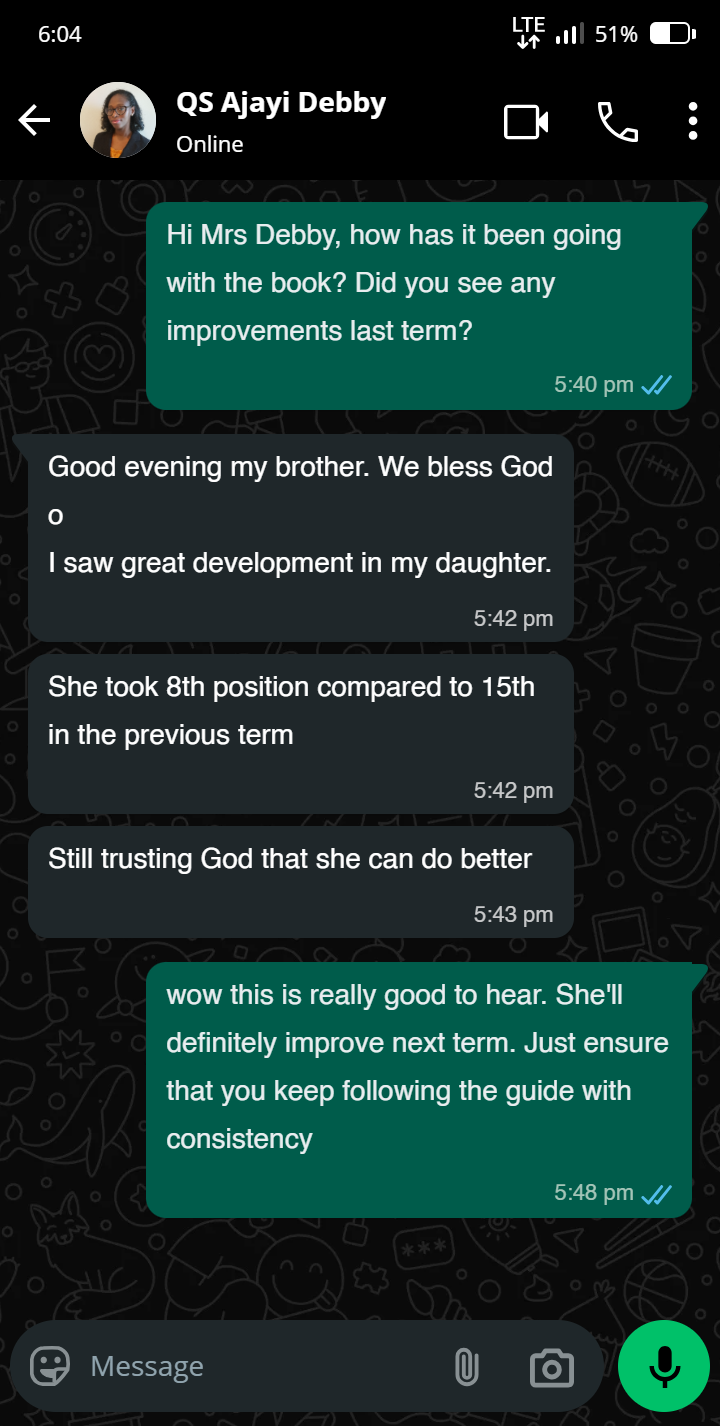
Real WhatsApp message from a parent
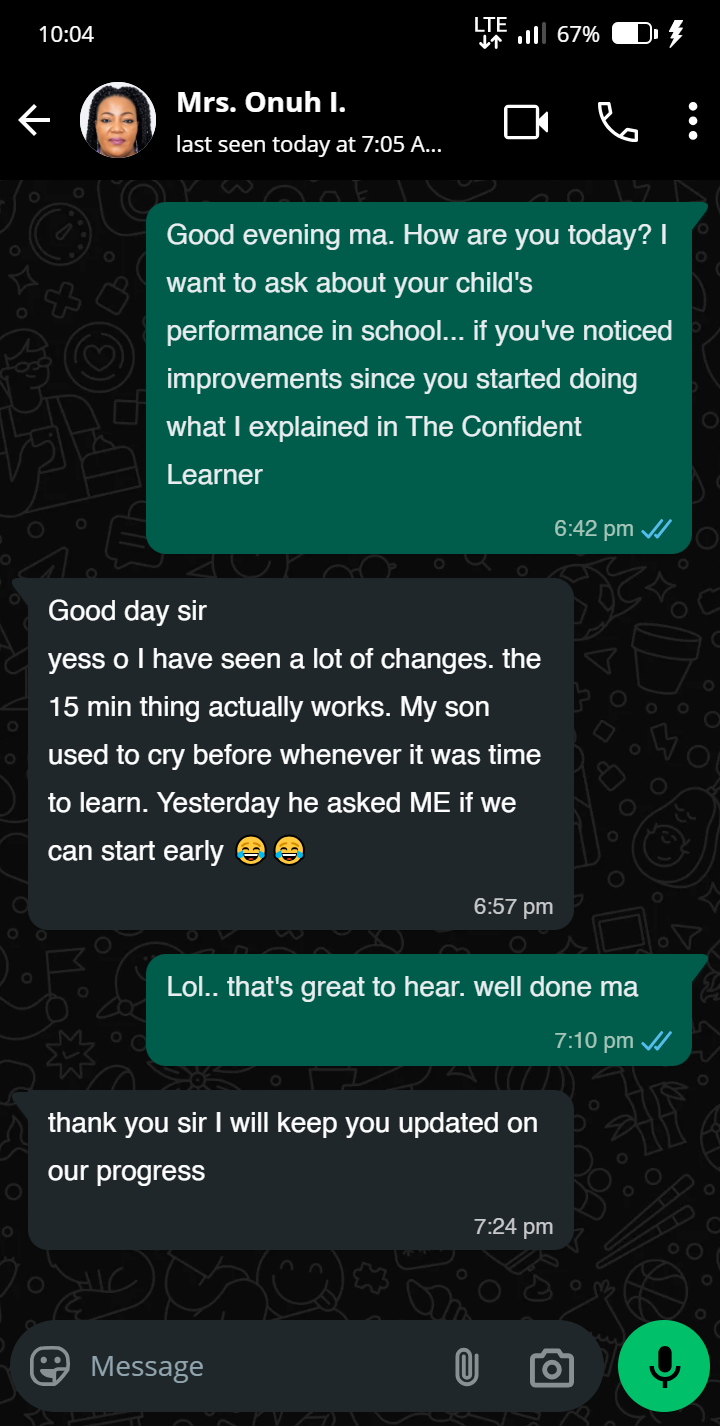
Real WhatsApp message from a parent
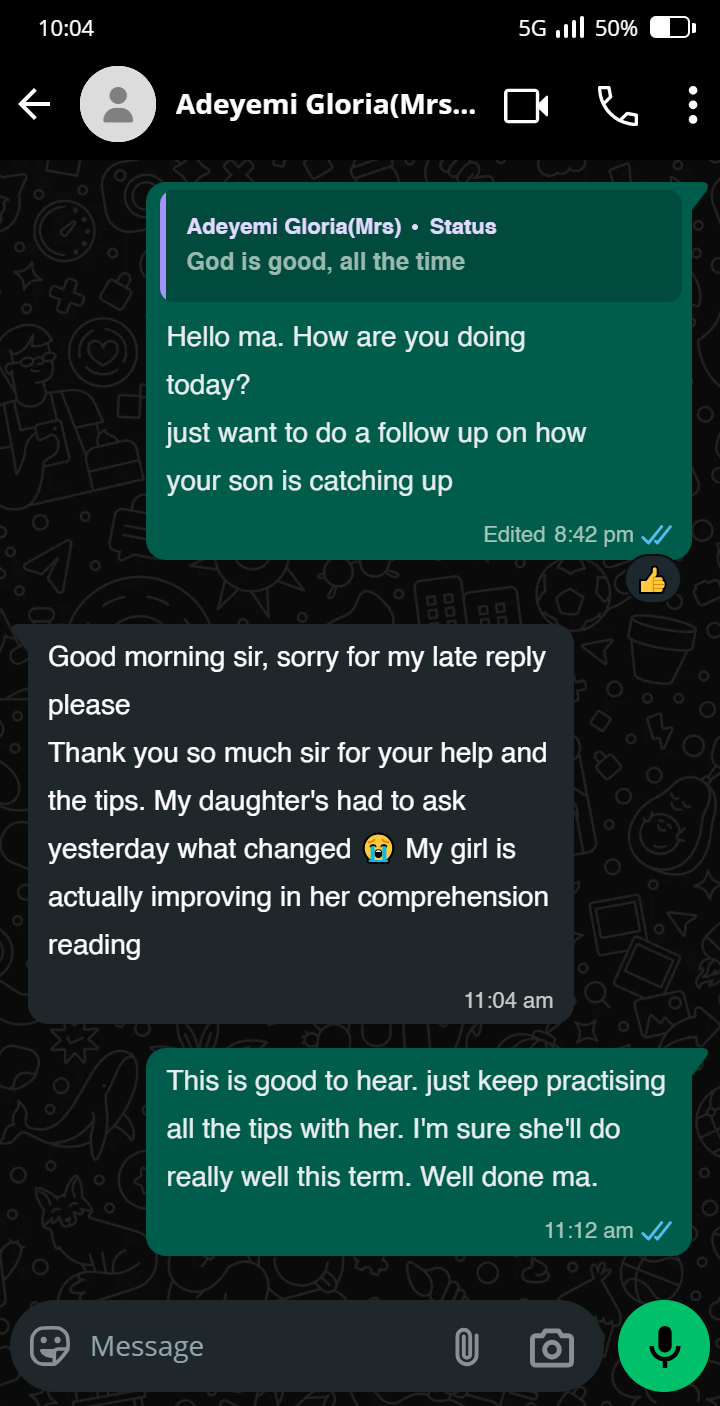
Real WhatsApp message from a parent
I had tried everything — tutors, extra lessons, shouting, crying. This book helped me understand WHY my son struggled. Within 6 weeks, his teacher called me to ask what had changed. I burst into tears on the phone.
My daughter used to cry before every test. She said she was stupid. After two months of following this book, she scored 16 out of 20 on her maths exam and ran to me with the paper. That moment healed something in me as a mother.
What I loved most is that this book doesn't make you feel like a bad mother. It's written with so much warmth and understanding. I felt seen. And it actually works — my son is now in the top 5 of his class.
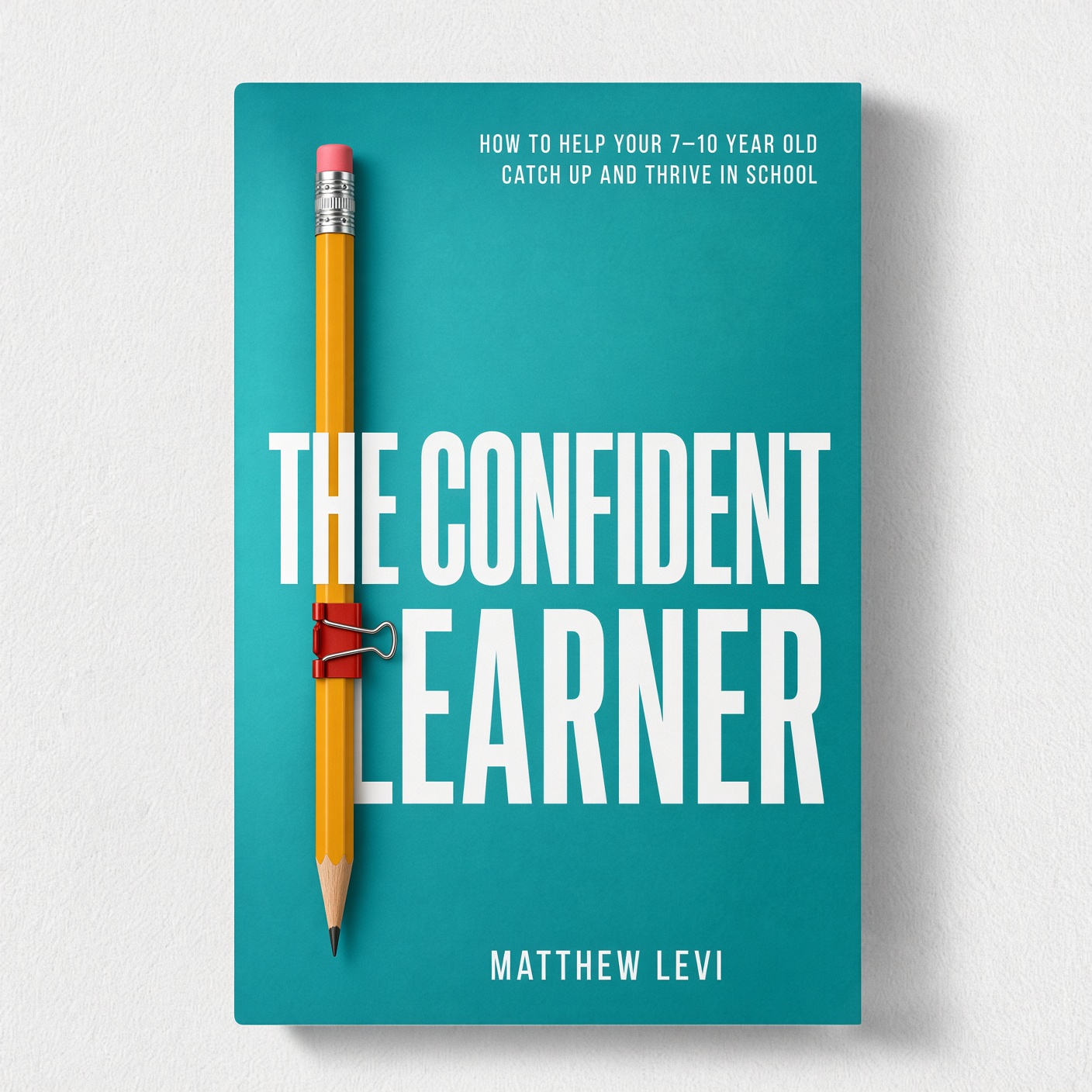
Introducing: The Confident Learner System
A practical, step-by-step system built for the busy Nigerian mother who wants to turn her child into a brilliant, confident learner in just a few weeks — with my personal support along the way. For children aged 7 to 10 — Primary 2 to 5.
The Secret Cartoon Memory Lock
Your child remembers every Ben 10 episode because it is a story with pictures. You will learn to turn any multiplication rule, spelling or grammar point into a 2-minute "cartoon scene" they see in their mind and retell back to you, so it sticks without drilling.
The 15-Minute Upper-Primary System
One fixed 15-minute routine: 3 minutes to preview, 8 minutes for the cartoon-scene method, 4 minutes of retelling. Done at the same time daily, so there is no 3-hour battle and no shouting.
The Exam Hall "Blank Mind" Cure
A 3-step routine your child practises at home so that when the paper is in front of them, they can calm down, "replay" the scene, and find the answer they already know.
The "Reading to Learn" Pivot Method
The exact technique to help a child struggling with comprehension become a fast, confident reader who understands and answers summary questions perfectly.
Your Final Golden Window
Ages 7–10 is where academic identity is formed. Fix their learning foundation now, before secondary school hardens the belief that "I am dull" into a permanent scar.
Just 15 Minutes a Day
No long study marathons. No shouting. No beatings. Just gentle, visual, memory-locking exercises that fit into your real, busy life.
📲 This month's WhatsApp support group is capped at 50 mothers
I answer questions personally, so I can only guide a limited number of mothers at once. When the group is full, I will close it and open a new one later.
You also get these 4 bonuses
Absolutely FREE
These bonuses were created to give you everything you need — not just the system itself, but the exact words to say, ready-to-print tools, personal support, and a meal plan that fuels your child's focus.
The Full "What to Say" Script Bank
Exact words for the hardest moments: a bad test result, a relative's comparison, the day your child says "I'm not smart." No guessing what to say when it matters most.
Every Printable Tracker & Template
The weekly study tracker, the recall checklist, the mock-test log, and the full 30-day calendar — all in one place, ready to print and use from day one.
Private WhatsApp Support Group
Join the group where I'm personally active, answering questions and guiding parents through the exact methods in this system. You're not figuring this out alone.
The Focus-Boosting Meal Plan
A simple, practical food guide using everyday African ingredients — what to feed your child for better concentration, memory, and energy at school, including what to avoid right before homework or a test.
One small investment. A lifetime of change.
You are currently spending ₦15,000, ₦20,000, or even ₦30,000 every single month on private lesson teachers who are just repeating the same failing school methods. Today, you can get the ultimate solution for a single, one-time investment.
The Confident Learner System
A Step-by-Step System for Mothers of Children Aged 7 to 10 (Primary 2 to 5)
One-time payment • Instant access • No subscription • No hidden charges
- The complete step-by-step Confident Learner System — use it on any phone, tablet, or computer
- The Secret Cartoon Memory Lock technique
- The 15-Minute Upper-Primary Study System
- The Exam Hall "Blank Mind" Cure
- The "Reading to Learn" Pivot Method
- 🔥 BONUS #1: The Full "What to Say" Script Bank
- 🔥 BONUS #2: Every Printable Tracker & Template
- 🔥 BONUS #3: Private WhatsApp Support Group
- 🔥 BONUS #4: The Focus-Boosting Meal Plan
- 30-day money-back guarantee — no questions asked
🛡️ Try it for 30 days. If you don't see the change, send me one WhatsApp message and I refund your ₦5,000. You keep the book and the bonuses.
Our Iron-Clad 30-Day "See the Change or
Get Your Money Back" Promise
I am so completely confident that these psychological methods will transform your child's academic performance that I am taking 100% of the risk off your shoulders. Join the system today. Apply the simple 15-minute steps for 30 days. If you do not see the change, calmer homework time within the first week and better results within about three weeks, just send me one message on WhatsApp and I will refund your ₦5,000. No arguments. No conditions. Keep everything, bonuses included.
Your child is waiting for
you to change their story.
A few weeks from now, your child will sit in a classroom to write another school test. They will either walk home with tears in their eyes, dragging their feet because they scored another 4 out of 20 — or they will run out of the school bus with a bright, beautiful smile, waving a paper with an 18 out of 20, shouting, "Mommy! Come and see! I told you I am a genius!"
The choice belongs entirely to you today, Mummy. Do not let fear, doubt, or procrastination steal your child's future while they are still in this critical 7-to-10 age window.
🧠 Unlock My Child's Genius Now — Instant Digital AccessInstant digital access • 30-day guarantee • For children aged 7–10 (Primary 2–5)